
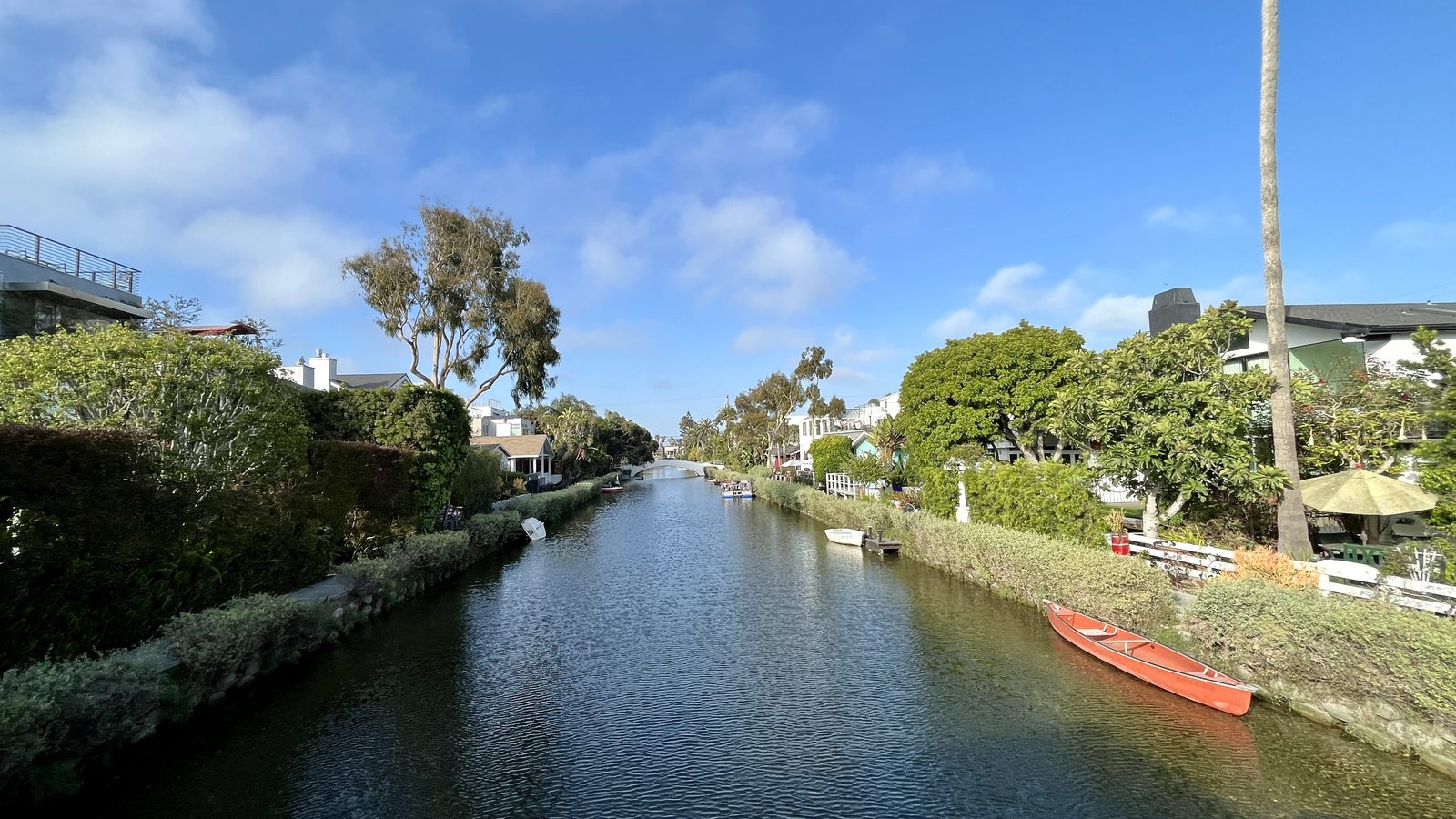
Venice is one of the few places in Los Angeles where you can walk to the ocean, grab coffee on Abbot Kinney, and watch the light change over the canals — all from your front door. The catch is the price of admission. With the all-home median in Venice hovering around $2.5 million, a single-family house here is out of reach for most buyers. A condo is the way in — the same neighborhood, the same lifestyle, at a fraction of the entry cost. It's the move we most often recommend to buyers who want Venice without the house price.
This guide walks through what condos actually cost in Venice in 2026, where to find them, and the two things that quietly make or break a condo purchase — the HOA and the insurance. Figures below are current as of mid-2026 and are approximate; Venice is a small, boutique market where a single sale can move the averages.
What a condo costs in Venice.
Here's the headline that makes condos compelling: while a Venice house runs around the $2.5 million median, condos commonly trade in the $900,000 to $1.6 million range for one- and two-bedroom units — with lofts and larger Marina-adjacent residences reaching higher. At an area figure near $1,150 per square foot, a well-located 800–1,200-square-foot condo lands squarely in that band. You're trading a yard and a detached structure for a far lower entry price and a near-zero maintenance footprint.
Condo vs. house in Venice
It's worth knowing the broader backdrop: Venice values softened modestly over the past year — roughly flat to down a couple of percent — and homes are taking a bit longer to sell, around the high-50-day mark. For a buyer, a slower, softer market is leverage: more time to do diligence, and more room to negotiate price, credits, and terms.
Where Venice condos cluster.
Venice condo inventory is smaller and more characterful than what you'll find in higher-density LA neighborhoods — this is boutique buildings and conversions, not towers. A few pockets to know:
- Near the canals and Abbot Kinney. Boutique low-rise buildings and converted lofts sit within walking distance of the Venice Canals and the Abbot Kinney corridor — the most walkable, design-forward part of the neighborhood. Live/work lofts in former industrial buildings (Venice has a notable warehouse-conversion tradition) turn up here and appeal to creative buyers.
- The Marina-adjacent edge. Toward the southern boundary of Venice, near Marina del Rey, you'll find larger condo buildings — some with the kind of amenities (elevators, parking structures, concierge) that the smaller Venice buildings don't offer. These tend to be the higher end of the condo range.
- The walk streets and ocean-adjacent blocks. Closer to the beach, smaller multi-unit buildings and condo conversions offer proximity to the boardwalk and sand — with the trade-offs of coastal exposure and, often, tighter parking.
The two things that make or break a condo: HOA and insurance.
With a house, what you see is what you buy. With a condo, you're also buying into a small shared business — the homeowners association — and its health matters as much as the unit itself. In 2026, two items deserve real scrutiny before you remove contingencies.
First, the HOA finances: the budget, the reserve fund, and any recent or pending special assessments. A building with thin reserves can hit owners with surprise five-figure bills. Second — and increasingly the bigger story — insurance. California's insurance market has tightened sharply; several carriers have reduced or exited coverage, and premiums have climbed, especially in coastal and higher-risk areas. For an HOA, a jump in the master insurance premium flows straight to your dues or arrives as an assessment. Confirm the building's master policy is current, adequate, and budgeted for.
Vet the HOA finances
Read the budget, reserve study, and two years of minutes. A thin reserve fund is a special assessment waiting to happen.
Confirm current master insurance
Is the master policy in force, adequate, and did the premium just jump? In coastal Venice, this is the 2026 wildcard.
Read the building with an architect's eye
How was it built, how does it age, is that stain cosmetic or structural? The unit is only half of what you're buying.
Before you buy — condo diligence
- HOA budget & reserves
- Special assessments
- Master insurance (the 2026 wildcard)
- CC&Rs / rental caps
- Litigation history
A great agent treats the HOA package like a second inspection — because in a condo, the building's finances are part of what you're buying.
The architect-agent read on a building.
A condo isn't just a floor plan — it's a unit inside a structure, and structures age in ways a listing photo won't show. AMRE is led by a licensed architect who is also a licensed Realtor, a rare combination in Los Angeles. On a Venice condo tour, that means a read most agents can't offer: how a warehouse conversion was actually built, whether that water stain is cosmetic or a building-envelope problem, how sound travels between units, what a renovation would really involve within HOA rules, and whether the building's bones justify its dues. In a neighborhood full of conversions and boutique construction, knowing the difference between charming and concerning is worth a great deal.
Is a Venice condo right for you?
If you want the Venice lifestyle — the canals, the cafes, the ocean air — without the $2.5 million house price or the upkeep that comes with it, a condo is the smart entry point. The keys are buying in a building with healthy finances and current insurance, understanding the rules before you commit, and having someone in your corner who can read both the unit and the structure around it.
That's the kind of look we bring to a Venice tour: an honest read on the unit, the building, and the numbers behind the HOA — so you know exactly what you're buying into before you fall for the address. When you're ready, get in touch and we'll walk a building with you.
Frequently asked questions.
How much do condos cost in Venice, CA?
As of mid-2026, condos are the most attainable way into Venice. While the all-home median list price in Venice sits around $2.5 million, condos commonly trade in the roughly $900,000 to $1.6 million range for one- and two-bedroom units, with area pricing near $1,150 per square foot. Lofts and Marina-adjacent buildings can run higher. Figures are approximate and move with the market.
Are there condos for sale in Venice, California?
Yes. Condos make up roughly a quarter of the Venice for-sale market. They range from converted warehouse lofts and boutique low-rise buildings near the canals and Abbot Kinney to larger Marina-adjacent buildings on the southern edge of Venice. Inventory is smaller and more boutique than in higher-density LA neighborhoods, so well-priced units can move quickly.
What should I check on HOA dues and insurance when buying a Venice condo?
Review the HOA budget, reserves, recent and pending special assessments, and the master insurance policy. California's insurance market has tightened, and many HOA communities have seen premiums rise sharply or carriers exit, which can push dues up or trigger assessments. In a coastal area like Venice, confirm the building's insurance is current and adequately funded before you remove contingencies.
Is Venice a good place to buy a condo?
Venice offers a walkable, beach-adjacent lifestyle near Abbot Kinney, the canals, and the boardwalk at a lower entry price than a Venice single-family home. A condo trades some control and yard space for lower maintenance and a more attainable price. The right fit depends on your budget, how long you plan to hold, and the specific building's HOA health.
Market figures are current as of June 2026 and approximate, drawn from public market data (MLS-sourced aggregators, Zillow, and C.A.R.). Venice is a small market where individual sales can move averages; condo pricing varies widely by building, size, and location. This article is for informational purposes only and is not financial, legal, or tax advice.
Looking at condos in Venice?
Get an architect-trained agent who reads the building, not just the unit — the HOA, the structure, and the real numbers behind a Venice condo. Honest guidance, no pressure.
Talk to AMRE →